


Your cart is empty, please place an order.



A Culinary Journey Through Morocco: Stories Told in Spice and Steam
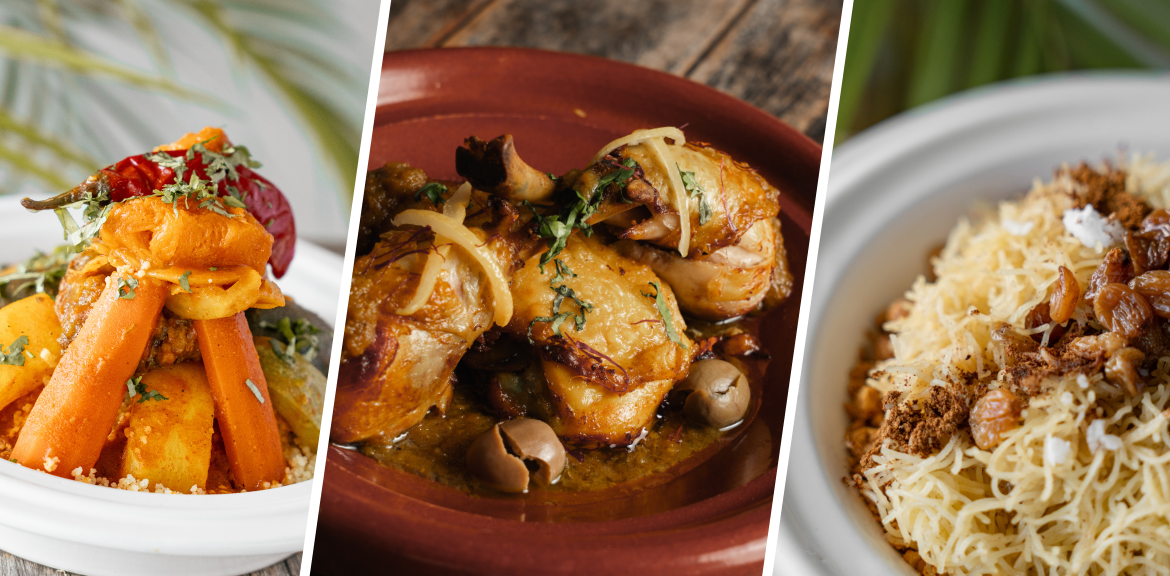
Moroccan cuisine is more than a list of ingredients or a set of recipes.
It is a journey — one that travels across mountains and deserts, through crowded markets and quiet family kitchens, carried in the hands of people who learned from those who cooked before them.
At La Terraza de la Medina, we honor that journey every day, one simmering tagine at a time.
Where Flavors Begin
Morocco’s culinary story starts with geography:
snow-capped mountains in the north, fertile plains in the west, oases stretching into the Sahara.
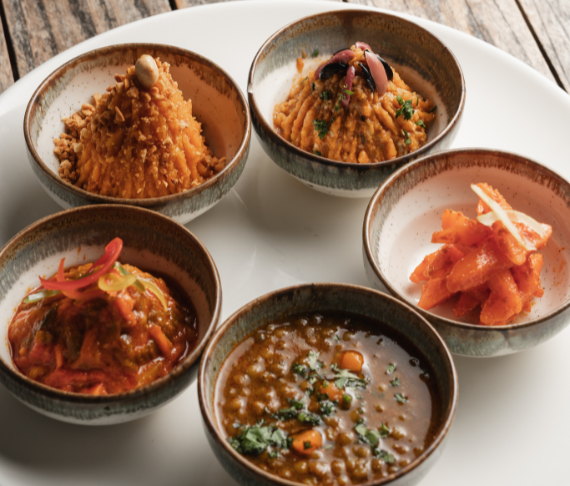
Each landscape brings something to the table — olives and citrus from the coast, dates and almonds from the south, wheat from the fields, and spices that crossed continents to arrive here.
snow-capped mountains in the north, fertile plains in the west, oases stretching into the Sahara.
Each landscape brings something to the table — olives and citrus from the coast, dates and almonds from the south, wheat from the fields, and spices that crossed continents to arrive here.
Walk into any Moroccan kitchen and you will find the same companions:
cumin and coriander,
turmeric and ginger,
cinnamon, saffron, and ras el hanout,
Each offering warmth, depth, and history — not sprinkled, but layered patiently.
The Tagine: A Pot, a Method, a Memory
Perhaps no dish reflects Morocco better than the tagine.
Named after the earthenware vessel it cooks in, the tagine is slow food before slow food had a name.
Meat or vegetables rest with spices, preserved lemon, herbs, prunes, olives or honey — and time does the rest.
The lid captures steam, returns it in flavor, and transforms simple ingredients into something tender and fragrant.
Named after the earthenware vessel it cooks in, the tagine is slow food before slow food had a name.
Meat or vegetables rest with spices, preserved lemon, herbs, prunes, olives or honey — and time does the rest.
The lid captures steam, returns it in flavor, and transforms simple ingredients into something tender and fragrant.
In Morocco, a tagine is as much connection as cooking:
Families gather around it,
Stories are shared above it,
Childhoods are remembered beside it.
Every tagine holds a memory — perhaps someone’s grandmother’s touch, or a tradition carried from one town to another.
Couscous: The Grain That Binds
If the tagine tells a story of slow patience, couscous tells one of community.
In its truest form, couscous is steamed — never boiled — sometimes three times, each step making the grains lighter, softer, and more fragrant.
Served with vegetables, broth, or lamb, it is traditionally shared on Fridays — a dish that brings families together before prayer, laughter, and rest.
In its truest form, couscous is steamed — never boiled — sometimes three times, each step making the grains lighter, softer, and more fragrant.
Served with vegetables, broth, or lamb, it is traditionally shared on Fridays — a dish that brings families together before prayer, laughter, and rest.
Couscous is not a meal alone —
it is a ritual of togetherness.
From North to South, A Moving Feast
Every region adds its own verse to the Moroccan table:
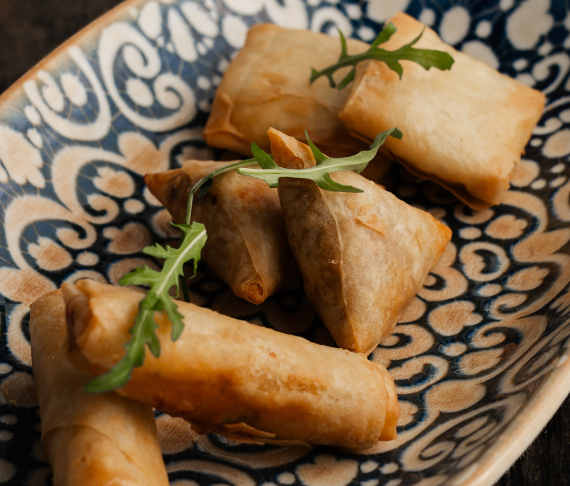
Fez, with its delicate pastries and sweet-savory combinations
Marrakech, vibrant with bustling spice markets and tajines cooked over coals
Essaouira, where sea breezes meet cumin and fresh herbs
Tangier, influenced by Andalusia, the Mediterranean, and the world beyond the Strait
Each dish is a chapter in a book still being written.
Fez, with its delicate pastries and sweet-savory combinations
Marrakech, vibrant with bustling spice markets and tajines cooked over coals
Essaouira, where sea breezes meet cumin and fresh herbs
Tangier, influenced by Andalusia, the Mediterranean, and the world beyond the Strait
Each dish is a chapter in a book still being written.
At La Terraza de la Medina
On our terrace, overlooking the medina, we do our best to honor these traditions — not by copying them perfectly, but by respecting what makes them meaningful.
We:
choose ingredients thoughtfully,
prepare dishes with patience,
serve in a place where time slows just enough to savor every detail.
Our kitchen is a meeting point — between memory and place, between heritage and curiosity. Here, Moroccan cuisine becomes what it has always been: an invitation.
We:
choose ingredients thoughtfully,
prepare dishes with patience,
serve in a place where time slows just enough to savor every detail.
Our kitchen is a meeting point — between memory and place, between heritage and curiosity. Here, Moroccan cuisine becomes what it has always been: an invitation.
A Journey Best Shared
Moroccan cuisine reminds us that food is not only fuel — it is celebration, comfort, and connection.
It speaks softly of:
market mornings,
family gatherings,
generations around a table,
spices carried by travelers across continents.
And whether you discover it for the first time or return to familiar flavors, Morocco has a way of making every meal feel like home.
It speaks softly of:
market mornings,
family gatherings,
generations around a table,
spices carried by travelers across continents.
And whether you discover it for the first time or return to familiar flavors, Morocco has a way of making every meal feel like home.
From the mountains to the coastline, from simmering pots to shared bread —
the journey continues every night on our terrace, dish by dish, story by story.
